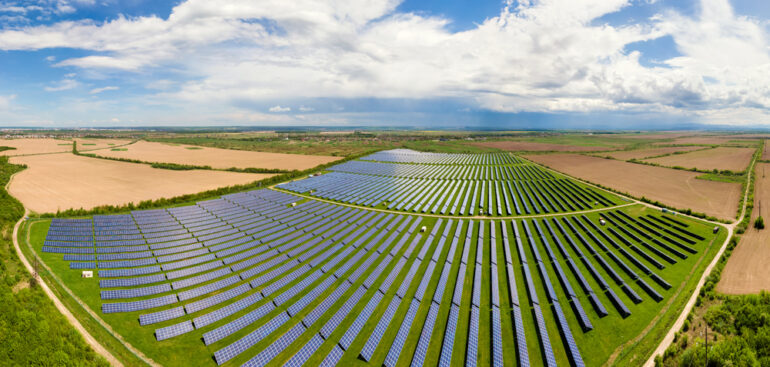

The Best Solar Service Provider in Trivandrum Kerala – Why Families Are Choosing Rudraveena Solar

As energy prices continue to rise and environmental concerns grow, more families and homeowners in Kerala are turning to solar power. If you are searching for the best solar service provider in Trivandrum Kerala, then look no further than Rudraveena Solar – a name that stands for trust, technology, and long-term savings.

Why Solar Energy Is the Future for Families in Kerala

Kerala receives abundant sunlight throughout the year, making it a natural choice for solar energy adoption. For families and residential owners, installing a solar power system offers numerous advantages:

1. Save on Electricity Bills Every Month

Electricity costs are a major part of every household budget. With solar panels installed on your rooftop, you can reduce your monthly electricity bill by up to 80 percent or more. Many of our residential customers in Trivandrum now pay only a minimal utility charge or even earn credit by sending excess power back to the grid.

2. Long-Term Investment with Peace of Mind

A solar installation is not just a cost – it is a long-term investment that pays off for years. Once installed, a well-designed system can generate power for 25 years or more with minimal maintenance. This means consistent savings, financial predictability, and a sense of independence from rising energy tariffs.

3. Eco-Friendly and Sustainable Living

Going solar is one of the most impactful ways to contribute to a cleaner environment. A typical residential solar system can reduce carbon emissions equivalent to planting hundreds of trees. For families who care about the planet and future generations, this is a powerful step toward sustainable living.

4. Power Backup and Uninterrupted Lifestyle

With hybrid and off-grid solar systems, your family can enjoy uninterrupted power even during outages. Children can continue learning online, elders remain comfortable with working appliances, and daily routines are not disrupted by sudden blackouts.


Why Rudraveena Solar is the Best Solar Service Provider in Trivandrum Kerala

At Rudraveena Solar, we combine technical expertise with personalized service to offer solar solutions that truly meet your needs.

Tailored Solar Designs for Your Home

Every home is unique. Our expert engineers analyze your energy usage, rooftop space, and location before designing a customized solar system that maximizes efficiency and output.

High-Quality Components and Certified Installation

We use only MNRE and BIS-approved panels, inverters, and components that ensure safety, reliability, and long-lasting performance. Our experienced technical team ensures that every installation follows the highest standards of engineering and safety.

Government Subsidy and Net Metering Support

Navigating government approvals and subsidy applications can be complex. We simplify the entire process by handling documentation, approvals, and grid connections – so you can relax while we deliver results.

After-Sales Service and Remote Monitoring

Our commitment does not end after installation. We provide maintenance support, cleaning services, and app-based remote monitoring systems to ensure your solar plant performs optimally for years to come.


The Future is Solar – And It Starts at Home

As Kerala moves toward a greener and more energy-efficient future, solar energy is no longer an option – it is a necessity. For homeowners, it is a smart financial decision, a sustainable lifestyle choice, and a step toward energy independence.

If you are ready to make the switch, choose the best solar service provider in Trivandrum Kerala – Rudraveena Solar. We are here to help you power your home, protect your family budget, and build a better future.


💬 Contact Us Today

Call us at (+91) 8590002123 or visit www.rudraveenasolutions.com to schedule a free rooftop assessment. Let us help you find the right solar solution for your family.

Rudraveena Solar – Powered by Trust. Driven by Technology.

The Central Ministry of India Provides Solar Subsidy for Home Installation – Empowering Indian Families for a Brighter Tomorrow

How Much Does Solar Panel Installation Cost in Trivandrum in 2026?

A Step Towards Savings and a Brighter Future! With the rising cost of electricity and increasing environmental concerns, more families across India are turning to solar energy as a long-term solution. The Central Ministry of India, through various government schemes, is making it easier for homeowners to make the switch by offering a solar subsidy for home installations. This financial support not only helps reduce the upfront investment but also empowers Indian households to save money and build a sustainable future.

What is a Solar Subsidy for Home?

A solar subsidy for home is a financial incentive provided by the Government of India to encourage residential users to install rooftop solar systems. Under the PM Surya Ghar: Muft Bijli Yojana, eligible homeowners can receive a subsidy of up to ₹78,000 for installing a rooftop solar system. This initiative, launched by the Ministry of New and Renewable Energy (MNRE), aims to make clean energy affordable and accessible to every Indian household.

Key Benefits of Installing Solar with Government Subsidy

  1. ✅ Lower Electricity Bills
    Once installed, solar panels significantly reduce monthly electricity expenses, often bringing them down to zero.
  2. ✅ Attractive Subsidy Support
    Through MNRE, the central government provides direct benefit transfer (DBT) subsidies, credited straight to your bank account.
  3. ✅ Sustainable Living
    Using solar energy helps reduce dependence on fossil fuels, lowering your carbon footprint and contributing to a cleaner environment.

How to Apply for Solar Subsidy for Home?

The process is simple and transparent:

  1. Visit the official government portal: https://pmsuryaghar.gov.in
  2. Register using your electricity consumer number and mobile number.
  3. Select a registered empaneled solar vendor in your region.
  4. Install the rooftop solar system through the vendor.
  5. Submit relevant documents and apply for inspection.
  6. After approval, the solar subsidy for home is directly transferred to your account.

Empowering Indian Families for a Brighter Tomorrow

The central ministry’s solar subsidy initiative is more than just a financial benefit — it’s a mission to bring energy independence, savings, and sustainability to every Indian home. By installing a rooftop solar system, families can enjoy 25+ years of clean, free electricity, contributing to both national energy goals and household financial well-being.


Ready to install your rooftop solar system?
At Rudraveena Solar, we help you complete the subsidy process, from consultation to installation — ensuring you get the maximum solar subsidy for home benefits.

📞 Contact us today on +91 859-000-2123 to begin your solar journey and light up your home with savings and sustainability!

Lithium Find Boosts India’s Efforts for Energy Independence by 2047

India’s edge in renewable generation and the recent discovery of vast lithium reserves, along with deep cost reductions in clean technology, can enable a pathway for cost-effective energy independence by 2047, a latest Berkeley Lab study has found.

The study titled Pathways to Atmanirbhar Bharat, released by the U.S. Department of Energy’s Lawrence Berkeley Lab, examined India’s three most energy-intensive sectors – power, transport, and industry.

The study determined that achieving energy independence will generate significant economic, environmental, and energy benefits.

The economic benefits include $2.5 trillion in consumer savings through 2047, and a reduction in fossil fuel import expenditure by 90% or $240 billion per year by 2047. The lower value of imports and domestic savings are expected to enhance India’s industrial competitiveness globally and enable its net-zero commitment.

Domestic Lithium Reserves

The report said that most of the 2 million tons of lithium needed by 2040 for manufacturing new electric vehicles (EV) and grid-scale battery storage systems could be produced domestically using newly discovered reserves.

Additionally, the Indian industry must transition to clean technologies such as EVs and green steel manufacturing.

India is one of the world’s largest auto and steel exporters, with their largest markets in EU countries committed to carbon neutrality and a potential carbon border adjustment tariff.

“India’s energy infrastructure requires a $3 trillion investment in the coming decades, and our study finds that prioritizing new energy assets that are cost-effective and clean is crucial for long-term financial sustainability,” said Amol Phadke, Berkeley Lab scientist and a co-author.

The study found that India has a unique advantage in leapfrogging to a clean energy future since the bulk of its energy infrastructure has yet to be built.

India’s growing energy demand offers a significant runway of fifteen years for the existing fossil energy assets to transition to clean energy, the report said.

Looking Forward

The report showed that the country’s energy independence pathway would involve the power sector installing more than 500 GW of non-fossil electricity generation capacity by 2030, followed by an 80% clean grid by 2040 and 90% by 2047.

It said that 100% of new vehicle sales could be electric by 2035, and heavy industrial production could shift primarily to green hydrogen and electrification.

However, the energy transition would require significant policy support, including deployment mandates for clean technologies, financial and policy support for emerging technologies such as green hydrogen, and investment in domestic manufacturing capacity.

“The case for clean energy has never been stronger. India has achieved the world’s lowest renewable energy prices and has found some of the world’s largest lithium reserves,” said Nikit Abhyankar, Berkeley Lab scientist and the lead author of the study.

India is currently the largest energy consumer in the world, and its energy demand is set to quadruple in the coming decade. Currently, the country must import 90% of the oil, 80% of the industrial coal, and 40% of the natural gas it consumes.

Price and supply volatility in the global energy markets inevitably strain India’s foreign exchange reserves, resulting in economy-wide inflation.

The government, earlier in February, had announced the discovery of 5.9 million tons of lithium reserves for the first time in the country in the Reasi district of Jammu & Kashmir.

The Union Cabinet approved the Nationally Determined Contribution (NDC) as part of the global response toward climate change goals as agreed under the Paris Agreement. As per the updated NDC, India aims to reduce the emissions intensity of its GDP by 45% by 2030 from 2005 levels and achieve 50% of total installed power capacity from non-fossil fuel-based sources by 2030.